


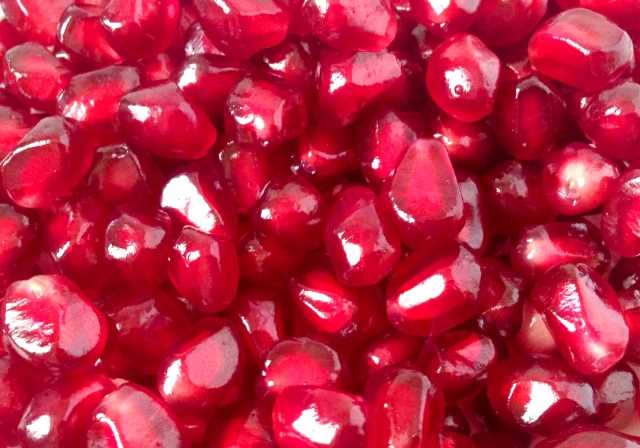
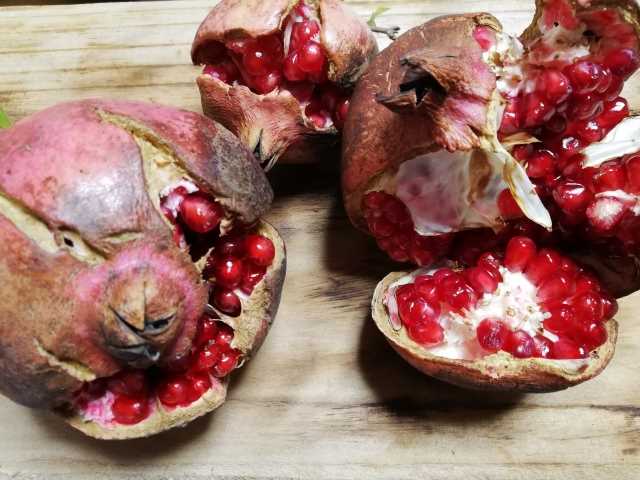
Do you like pomegranates, this time we will talk about pomegranates.
History of pomegranates
There are only two species of pomegranate, the pomegranate we are familiar with and the Socotra pomegranate, which is native to Socotra Island in East Africa. The Socotra pomegranate has small fruits and is not edible.
The pomegranate we know so well is said to have originated in what is now Iran and the surrounding area, but there are many theories. Pomegranates have been cultivated since ancient times, as far back as the Mesopotamian civilisation in present-day Iran. The pomegranate is also considered a symbol of fertility and prosperity of offspring due to the abundance of its fruit, and is regarded as a very auspicious fruit worldwide.
In Japan, pomegranates were introduced from China during the Heian period (784-1185) and were mainly used as ornamental garden plants and bonsai. The pomegranates that were actively cultivated in Japan after the Meiji era (1868-1912) are called flowering pomegranates, and many of them do not produce fruit.
Pomegranate cultivation
Pomegranate is a cold- and heat-tolerant fruit tree that can be grown in tropical and sub-arctic zones. In Japan, it can be grown from Okinawa to the Tohoku region. It is rare to find a fruit with such a wide cultivation range, and this may be the reason for the pomegranate’s spread around the world.
Pomegranate crest
The coat of arms is a reminder of the pomegranate as a lucky charm. This is the national emblem of the Kingdom of Spain.
The lower part of the shield is decorated with a broken pomegranate.
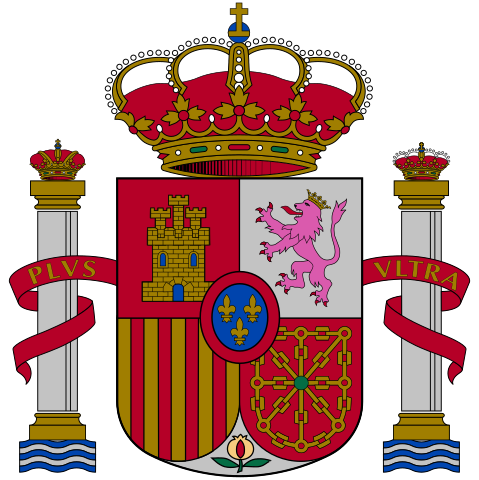
This is the original coat of arms of the Kingdom of Spain. It belonged to the Kingdom of Granada, a former Muslim kingdom on the Iberian Peninsula. The Kingdom of Granada was destroyed in 1492 during the reconquest by the Christian state of Nasr, but its coat of arms, the pomegranate, was passed onto future generations.
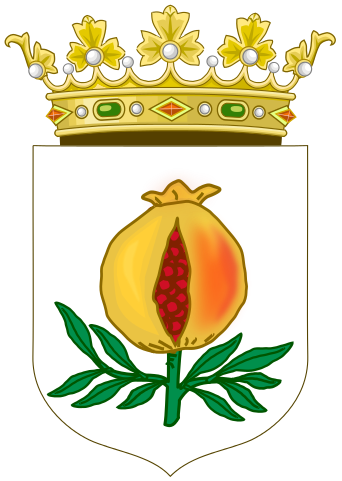
The pomegranate motif is used not only on the national emblem of the Kingdom of Spain, but also on the municipal emblem of the province of Granada, where the Kingdom of Granada was located. It is larger than the national emblem of the Kingdom of Spain. It is indeed local.
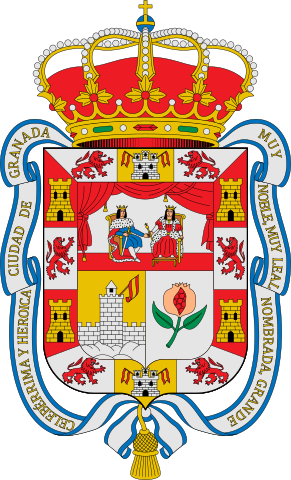
When you all have the opportunity to eat pomegranates, remember the history that unfolded in the Iberian Peninsula.
Reference website Access date 2023/04/04 (Japanese)
ザクロの特徴と日本におけるザクロ栽培の歴史について 村松 昇
Wikipedia – スペイン王国
Wikipedia-ザクロ
wikipedia -ナスル朝