Have you ever visited Japan? Did you drink Japanese plum wine then? The refreshing aroma and rich sweetness of plums make it a great dessert liqueur. Umeshu is a liqueur made by soaking plum fruits in alcohol. Umeshu is the most famous, but in Japan, other seasonal fruits such as lemon, kiwi and strawberry are also popularly used to make liqueurs. This article introduces basic fruit liqueurs.
1. Prepare plum nuts (your favourite fruit) First, prepare plums. If you do not have plum fruits, apricots can be used. Other fruits can also be used, but cut thick-skinned fruits into quarters. If using citrus fruits such as lemons, keep the peel and fruit separate and remove the white part (this part can cause bitterness). Also, if using less acidic fruits, soak them with lemons or other more acidic fruits for a better taste.
If using plums, soak them in water for an hour beforehand to remove the scum.
2.Remove the heft, wash well and pat dry. Wash the fruit well and remove the heft. Then dry the water from the surface. If cutting, cut after drying!
3.prepare the white rock sugar The reason for using white rock sugar can be understood in the process of making the liqueur. When you first start soaking the fruit in the liquor, the white rock sugar has hardly melted and the liquor permeates towards the fruit, which has a high osmotic pressure. After a while, the concentration of the liquor increases as the white rock sugar dissolves, and now the reverse process takes place, with the water containing the fruit flavours dissolving outwards. In this way, a good-tasting liqueur can be produced. If white rock sugar is not available, just sugar can be used, but do not put in all the sugar when soaking the fruit, but put it in after a certain period of time, e.g. every half month or so, or in two or three batches.
4.choose the liquor Choose the liquor in which to soak the fruit. It is best to use spirits with an alcohol content of 35% or more to prevent spoilage. In Japan, plain industrial rum, known as white liquor, is used, but it can also be made with other drinks. Citrus fruits will work well with gin, and brandy will give a richer flavour. For a plain taste, vodka and rum are good choices. If you use whisky or a strong-flavoured liquor, such as flavoured rum, consider how it will work with the flavours of the fruit you are dipping.
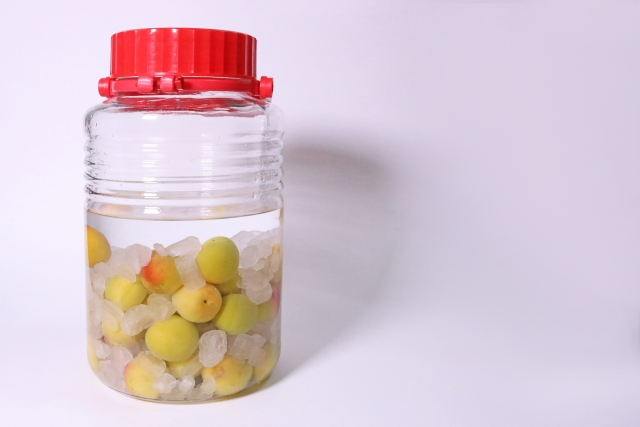
5.soaking. Once the ingredients are ready, get started making. Place the fruit in a wide-mouth jar. Instead of putting all the prepared fruit in at this point, put the fruit and the icing sugar alternately, as shown in the top photo. The basic ratio of fruit, liquor and sugar is 1 fruit to 2 liquor and 0.5-1 sugar. In other words, for 1 kg of fruit, 2 litres of liquor and 500 g to 1 kg of sugar. Adjust the quantities according to your own preferences.
Fruit, alcohol and sugar in a In a ratio of 1:2:0.5
6.Let’s get creative. In Japan, it is made simply with fruit, sugar and alcohol, but you can add spices such as cinnamon, cloves and black pepper, or herbs such as mint and lemongrass. Note that cut fruit and soft fruit should be removed after a month or so, as they will dissolve if left to soak for a long period of time. The removed fruit can be processed into jams.
Cut and soft fruits are taken out after one month.
7.Enjoy! Enjoy the finished fruit liqueur, drink it straight, mix it with soda, try it over ice cream, use it in sweets and enjoy it in many other ways.