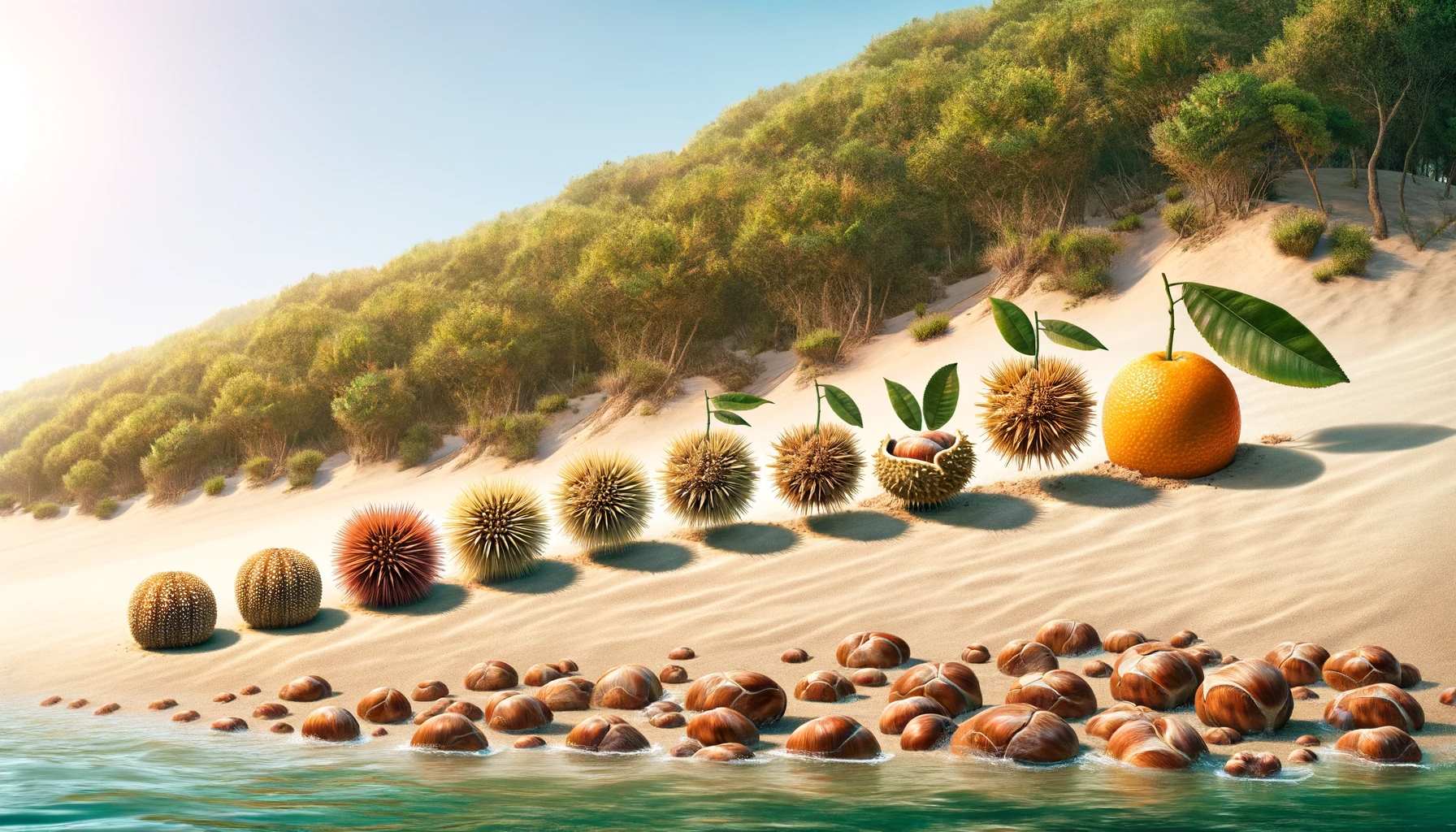
Evolution, from sea urchins to chestnuts. And then to mandarins (just kidding)
With winter comes the desire to relax under a kotatsu and savor mandarins. Known for their round and cute shape, mandarins are one of the most beloved and visually appealing fruits in Japan. In this article, we’ll explore the aesthetic aspects of mandarins, including their shape and characters inspired by them.
Firstly, let’s talk about mandarin art. Mandarins can be crafted using origami. The first method is a flat, two-dimensional folding style, while the second method creates a more three-dimensional mandarin.
Mandarin Folding Styles:
Mandarin cross-section
Mandarin peel art
Mandarin peel art
Mandarin peel art
Japan also has many mandarin orange characters, with famous ones including Mikan Boy, Mikan Seijin, and Mikyan.
Mikan-Bouya (Mandarin boys)
Mikan Boy is a boy character from the Wenzhou mandarin variety who is sensitive to cold. His dream is to become a frozen mandarin. There’s a story about him living at his friend Sudachi-chan’s house while trying to overcome his aversion to the cold. He’s seen making efforts, like immersing himself in ice water, and meticulously records his progress on a line graph. His treasures include his mobile phone and a net given to him by his admired frozen mandarin. His favorite TV show is “Go! Go! Reitou Mikan” (Frozen Mandarin).
MikanSeijin
Mikan Seijin is a mandarin character with an alien setting, who appeared in “Mikan Seijin Hour” on Fuji TV’s “Ugo Ugo Lhuga” in the 90s. This character boasts an IQ of 20,000 with a highly advanced mandarin brain. Having experienced the horrors of war in the past, Mikan Seijin has a genetically ingrained philosophy of “No more conflicts.” With 100,000 volts running through his mandarin eyebrows, his hobbies include fishing for Strawberry Seijin and reading chemistry books. Interestingly, the entire planet of Mikan is scented like tea.
Mikyan
Mikyan is a popular mascot character from Ehime Prefecture, serving as the Deputy Governor for PR with a Smile. Born on November 11, 2011 (“Wan Wan Wan Wan Day”), Mikyan’s job is to promote Ehime. The character is distinguished by a heart-shaped flower and a tail of mandarin flowers, with a fondness for all things from Ehime, especially mandarins. Mikyan enjoys sports, travel, eating, and desires friends to help promote Ehime Prefecture. The name Mikyan combines “mi” from mandarin and the puppy sound “kyan,” playing on the English word “can” in “MICAN,” symbolizing a willingness to try various things.
Mandarins are not only delicious but also hold a lot of aesthetic potential. By delving deeper into mandarin origami, mandarin art, and intriguing mandarin characters, I hope to increase the number of mandarin enthusiasts and further enhance the enjoyment of the world of this fruit.