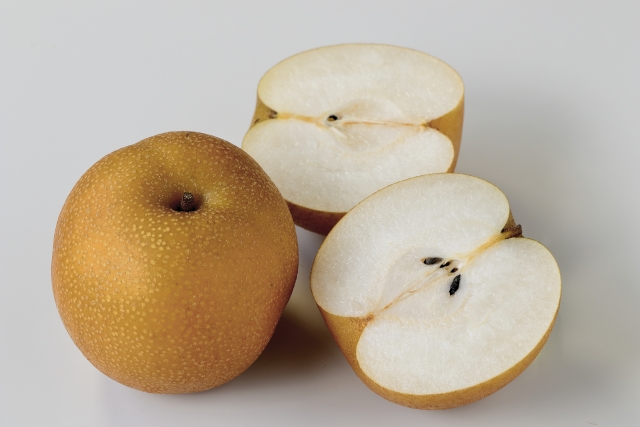
There are three main types of pears: European pears, Chinese pears, and Japanese pears. The charm of domestically produced Japanese pears lies in their crisp texture, juiciness, moderate acidity, and subtle sweetness. The three major varieties of pears are “Kosui,” “Toyosui,” and “Shinsui,” collectively known as “Sansui.”
The History of Pears Since the Yayoi Period
Believe it or not, pears were first consumed in Japan during the Yayoi period! Numerous edible seeds have been found at archaeological sites like the Toro ruins. The discovery of wild pear seeds, limited to areas near human settlements, suggests they were introduced from the Asian continent. The earliest documentation of pears is in the “Nihon Shoki,” where they are mentioned alongside mulberries and chestnuts, indicating they were recommended for cultivation. During the Edo period, over a hundred pear varieties were cultivated and enjoyed as “water fruits.”
The Charm of Pears
Pears are not only refreshingly sweet but also juicy with a unique crunchy texture. Japanese pears are low in calories, making them the perfect dessert for autumn. This unique texture is due to “stone cells” made from components like pentosan and lignin. These cells, also found in apples and guavas, are not digested in the human gastrointestinal tract, promoting bowel movements and aiding digestion. Pears also contain a protein-digesting enzyme called protease, which can tenderize meat when used in cooking.
Types of Pears
There are actually over 50 varieties of pears. The most common are Kosui and Toyosui, but thanks to hometown tax donations and online shops, you can now access rare pears from all over Japan. Chiba Prefecture is the top producer of pears, but a recent favorite is the “Shinkansen” from Tottori Prefecture, known for its high sugar content and crunchy texture. Nagano Prefecture’s “Nansui” is juicy with little acidity and has a longer shelf life. “Niitaka” is hailed as the “King of Pears” for its rich aroma and is cultivated in Kumamoto, Chiba, Niigata, and Oita Prefectures. It’s a large variety, with the bigger ones being of higher quality and sweetness.
Pears contain potassium, which is said to alleviate swelling caused by cold. After a hot summer of excessive air conditioning and cold food, pears are just what your chilled body needs. Potassium also helps expel excess salt from the body, which can be beneficial after sweating. To recover from summer fatigue, why not actively consume pears this autumn?